Alphabet’s Nearly $500 Billion Wipeout Is a Warning Shot for the Ad Economy
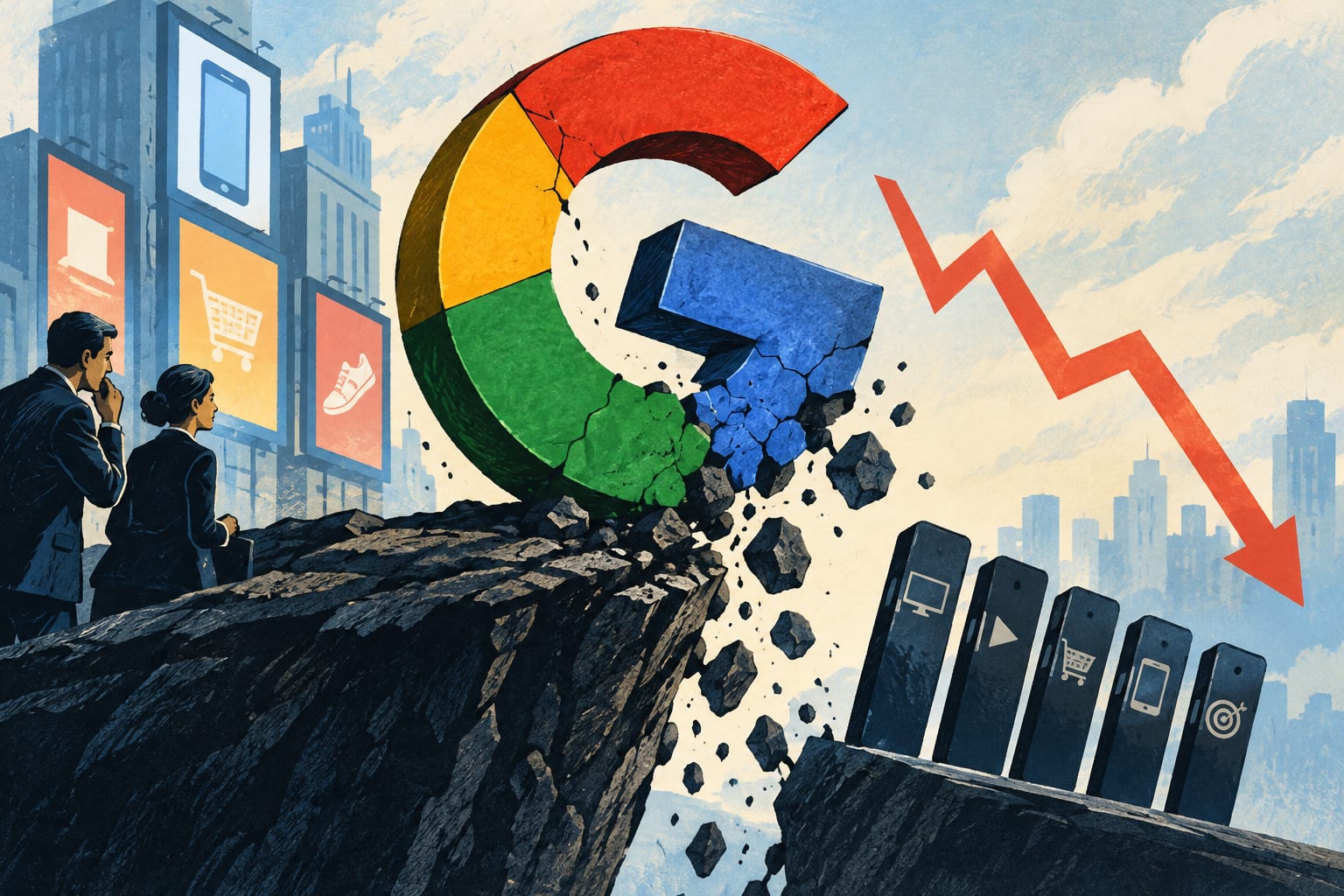
Alphabet shed close to $500 billion in market capitalization in a single trading day, a drop tied directly to growing fears that AI-generated search answers are eating into Google's advertising revenue. For a company whose entire financial engine runs on people clicking ads next to search results, the message from the market was blunt: if users stop clicking because an AI answer already gave them what they needed, the business model underneath Google search is in trouble.
The scale of the move is what makes it impossible to wave away. A loss of this size in one day is not a routine correction. It is the kind of number that shows up when a market collectively decides a company's core business faces a structural threat rather than a temporary headwind. In this case, the threat is the same technology Google itself has spent billions building and promoting: AI-powered search answers that increasingly satisfy a user's query without requiring a trip through the traditional results page, and without requiring a click on a paid link.
The part most coverage will miss
Most of the coverage racing out on this story will frame it as a simple cause and effect: AI answers replace search clicks, clicks drive ad revenue, so less clicking means less revenue, so the stock drops. That is the headline-ready version, and it is not wrong. But the detail worth sitting with is what it means that this is happening to Alphabet specifically, and not some AI upstart.
Alphabet is not a company caught flat-footed by a rival's technology. It built and deployed AI search answers itself. The nearly $500 billion drop is not the market punishing Alphabet for falling behind. It is the market pricing in the possibility that Alphabet's own product decisions are accelerating the erosion of its own ad business. That is a far more uncomfortable position than being disrupted by an outsider, because there is no competitor to simply out-innovate. The cannibalization is internal.
Analysis (opinion)
This is where our read differs from the easy narrative, and it is worth being clear that what follows is our analysis, not reported fact. Every outlet chasing this story today will write some version of "AI is killing the business model that built Google." That is true as far as it goes, but it is the obvious angle, and obvious angles tend to miss the more interesting question underneath.
Our analyst's approach has always been to ask what the facts on the page actually support rather than what the panic narrative wants to claim. Here, the facts support a single-day market cap swing driven by ad-revenue concerns tied to AI search cannibalization. What they do not yet support is any claim about whether this is a permanent structural shift or a sharp, overcorrected reaction to a risk the market had been underpricing for months. Markets often move in one violent day what should have been priced in gradually over quarters. A nearly $500 billion drop is as much a statement about investor psychology catching up to a known risk as it is new information about Google's future.
The harder question for Alphabet is not whether AI answers reduce clicks. It is whether Alphabet can build a monetization model inside the AI answer itself, one that does not depend on the click at all. That is the pivot the company needs to prove it can make, and it is the detail that will matter far more a year from now than today's single-day number.
The other side
It is fair to note that a one-day market cap drop, however large in dollar terms, is not the same as a confirmed collapse in revenue. Alphabet remains one of the largest and most diversified technology companies in the world, with businesses well beyond search advertising, and markets regularly overreact to single data points before settling into a more measured valuation in the days and weeks that follow.
The question to ask now
The real question is not whether AI search answers are cutting into ad clicks. The summary already confirms that much. The question is whether Alphabet can turn its own AI answers into a new revenue engine before the old one shrinks too far to fund the transition.
Advertisers reassessing their budgets are increasingly prioritizing seo relevant keywords backlinks ad strategies that drive measurable traffic rather than broad, unfocused spending.
Source: MoneyWise.com
Missed the last one? AI Is Draining Traffic From News Publishers, But the Real Story Is in the Engagement Numbers