Google Beats Publisher Lawsuits Over AI Overviews, But the Fight Isn’t Over
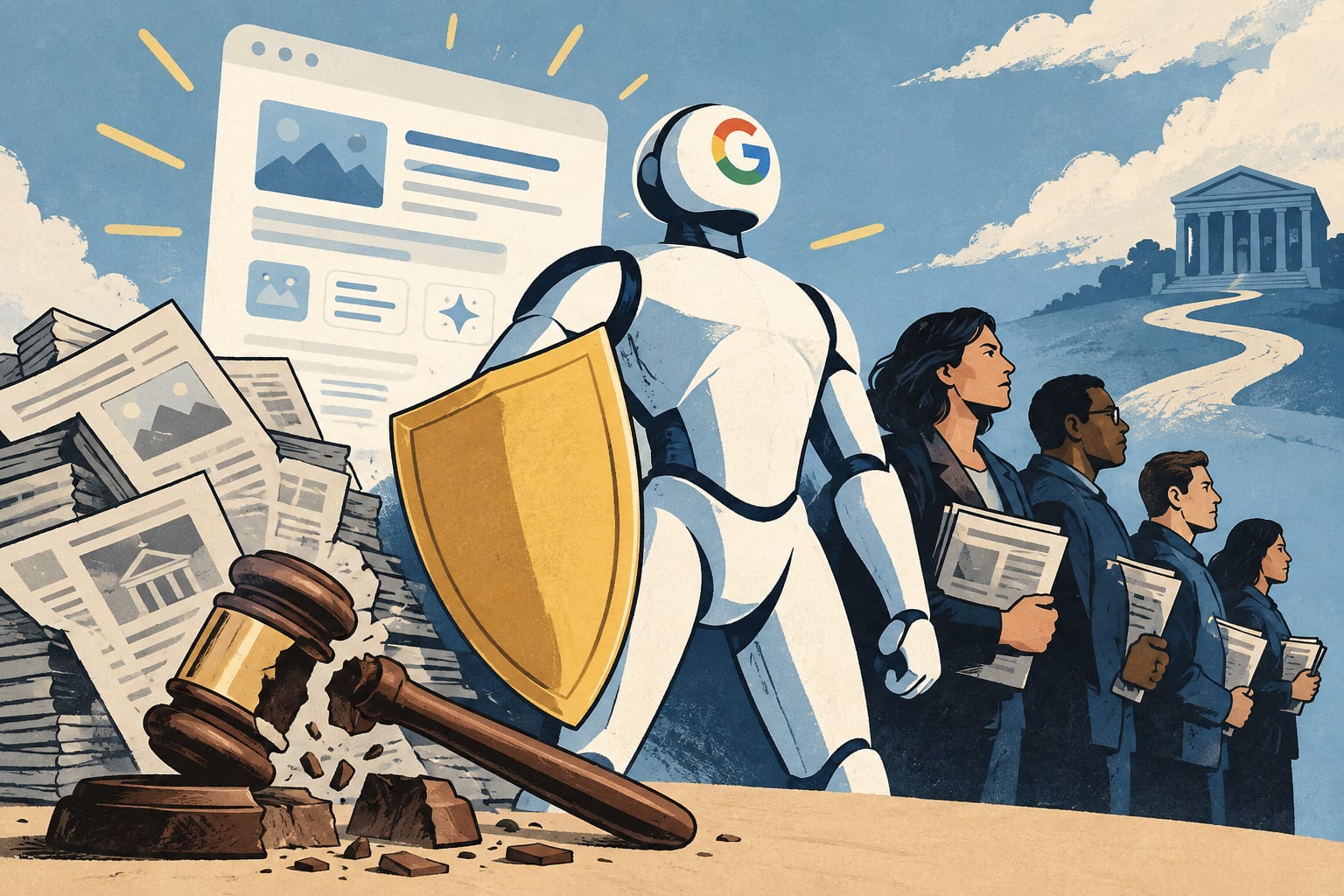
A federal judge has thrown out lawsuits from Penske Media Corporation and education company Chegg that accused Google of exploiting publisher content to power AI Overviews, the AI-generated summaries that now sit atop many search results. Judge Amit Mehta of the US District Court for the District of Columbia issued the ruling on Wednesday, September 30, dismissing the companies' antitrust claims and writing that their legal theories "fail to get out of the starting gate."
Penske, which owns Rolling Stone, Billboard, Variety, The Hollywood Reporter and Deadline, joined Chegg in arguing that Google puts publishers in an impossible position. To stay visible in search results, sites must let Google crawl their pages. But Google's AI tools then use that same material to answer user questions directly, without sending readers back to the original source. The publishers said this arrangement threatens the traffic that drives their advertising and subscription revenue.
Mehta didn't dispute that the concern is real. He just found it doesn't hold up under antitrust law. The publishers had framed the relationship as a kind of reciprocal deal: they let Google index their content for free, and in exchange, Google was supposed to send visitors their way. Mehta rejected that framing outright, writing that the companies had "pleaded only that they have an 'expectation' that Google will send them search traffic," and that "an expectation is not an agreement. It is simply how a general search engine works." No contract obligated Google to deliver traffic in return for indexing rights.
The judge also rejected the argument that Google Search and AI Overviews function as separate products. Instead, he treated them as parts of one integrated search experience, a framing that backs Google's own position that it owes publishers nothing in terms of how it displays their indexed content.
The part most coverage will miss
The ruling carries extra weight because of who wrote it. Mehta is the same judge who concluded in 2024 that Google operates an illegal monopoly in online search. That history makes this dismissal notable: a judge already on record finding Google guilty of monopolistic conduct in one case still found the publishers' AI Overviews claims legally insufficient in this one.
It's also worth noting what the ruling does not decide. Mehta explicitly declined to rule on the publishers' remaining state-law claims of unjust enrichment, meaning that piece of the dispute is still open. And accounts differ on how final this outcome actually is. Some reporting describes the dismissal of Penske's case as being without prejudice, which would leave room for the company to refile in some altered form. Other coverage treats the order as final and appealable. That ambiguity means neither company's next move is yet clear.
Analysis (opinion)
This site's analysts have made a habit of asking what a ruling doesn't say, and here that's the whole story. Mehta wasn't cold to the publishers' complaint. He called himself "not unsympathetic" to publishers, journalists, educators and creators watching AI tools absorb their work while traffic dries up. But sympathy isn't a legal standard, and he said as much: antitrust law cannot substitute for a legislature's judgment about how to handle the economic fallout of new technology. That's a pointed hand-off to Congress, and it suggests Mehta sees this as a policy problem dressed up as a legal one. The publishers tried to force a decades-old, informal bargain into the shape of a contract. The court wasn't buying it, and the real fight now shifts to lawmakers and the negotiating table, not the courtroom.
The other side
Publishers and their allies will likely argue this ruling lets Google have it both ways: demanding crawl access to stay competitive in search while using that same content to keep users on Google's own pages. From their perspective, the harm to traffic and revenue is concrete even if antitrust law doesn't have a category for it yet, and the dismissal leaves that harm unaddressed.
What to watch
The decision settles nothing about whether Google can freely use copyrighted material, and it leaves the unjust enrichment claims unresolved. The bigger question now is whether Congress or new licensing deals will step in where antitrust law just declined to. Until one of those happens, publishers are left asking the same thing Mehta's ruling didn't answer: who decides what they're owed when the search engine stops sending anyone their way at all.
While Google lawsuits backlinks SEO discussions dominate industry forums, the company’s legal victory over AI Overviews raises important questions about future content attribution practices.
Source: ColombiaOne.com
Our last article on this: AI Search Promises Faster Answers. The Fine Print Deserves a Look Too.