Google Adds Five New Flow Tools for Filmmakers, But Details Are Still Thin
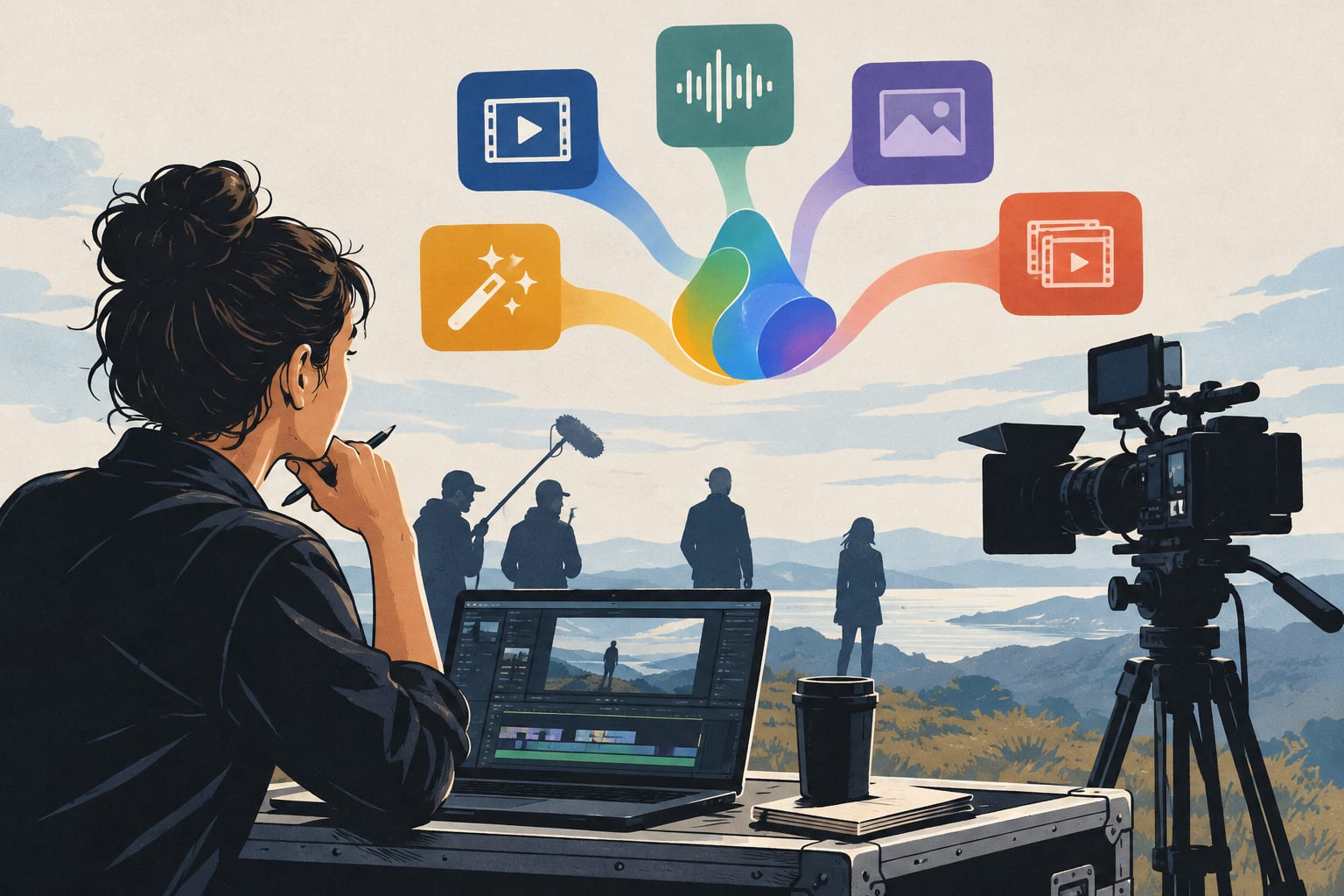
Google has rolled out five new tools inside Flow, its AI filmmaking platform, aimed squarely at filmmakers and visual artists. That is the headline, straight from Online Tech Tips, and on its face it reads like another incremental update to a product Google has been steadily building out since Flow's debut as part of its Veo video generation push.
Flow has positioned itself as a workspace for people making short films and visual content with AI, letting users generate clips, extend scenes, and stitch together sequences using Google's underlying video models. Adding tools "designed with filmmakers and visual artists" fits the pattern Google has followed all year: court the creative community directly, rather than just shipping a general-purpose video generator and hoping filmmakers find a use for it.
The part most coverage will miss
The detail worth sitting with is the phrasing itself: these tools were designed with filmmakers and visual artists, not just for them. That is a distinction Google has leaned on before when describing Flow's development, and it signals something about how the company is building this product. Rather than treating filmmakers as end users who adapt to whatever ships, Google appears to be positioning them as collaborators shaping the toolset itself.
The other detail buried in a one-line summary like this is the number five. Five is a deliberate batch size, not a scattershot update. Google tends to group related capabilities together when it wants a release to read as a coherent step forward rather than a grab bag of minor fixes. That suggests this update was bundled for a reason, likely tied to a broader push to make Flow feel like a professional-grade tool rather than a demo of what AI video can do.
Analysis (opinion)
Our analyst, who makes a habit of looking past the press-release framing to find the angle other outlets skip, points to something the coverage so far hasn't addressed: why filmmakers specifically, and why now. Google has spent much of this year trying to convince professional creators that AI video tools are not just novelty generators but something that belongs in an actual production pipeline. Tools "designed with" the creative community read as an attempt to build credibility with an audience that has been openly skeptical of AI's place in filmmaking, from writers' rooms to editing bays.
The timing also matters. AI video tools have faced pointed criticism over sourcing, labor displacement, and the authenticity of AI-generated footage in professional work. A release that foregrounds filmmaker involvement in the design process functions as both a product update and a public relations move, addressing the skepticism before it is even raised. Whether the tools themselves are genuinely shaped by working filmmakers or simply marketed that way is impossible to verify from the outside, but the framing itself tells you what Google thinks its audience is worried about right now.
The other side
It is worth saying plainly that Google has a track record of shipping real, usable features into Flow rather than empty announcements, and five new tools aimed at a specific professional audience could simply reflect normal product iteration. Companies building creative software routinely consult the people who use it, and there is nothing inherently suspicious about a platform maturing in response to user feedback. The simplest explanation is sometimes the correct one: Google wants Flow to be good at filmmaking, so it built tools with filmmakers.
What to ask now
The real question isn't whether Google added five tools. It's what those tools actually let a filmmaker do that they couldn't do before, and whether "designed with" filmmakers means meaningful creative control or just better marketing language. Until Google or outlets covering this go beyond the headline and detail what each of the five tools does, readers are left trusting a framing rather than evaluating a feature set.
Filmmakers promoting their Flow-related tutorials and reviews often rely on seo relevant keywords backlinks to help their pages reach creators searching for new AI video tools.
Source: Online Tech Tips
Read our previous article: Tilly Norwood's 'Misaligned' Debut Puts an AI Actress' Promises to the Test