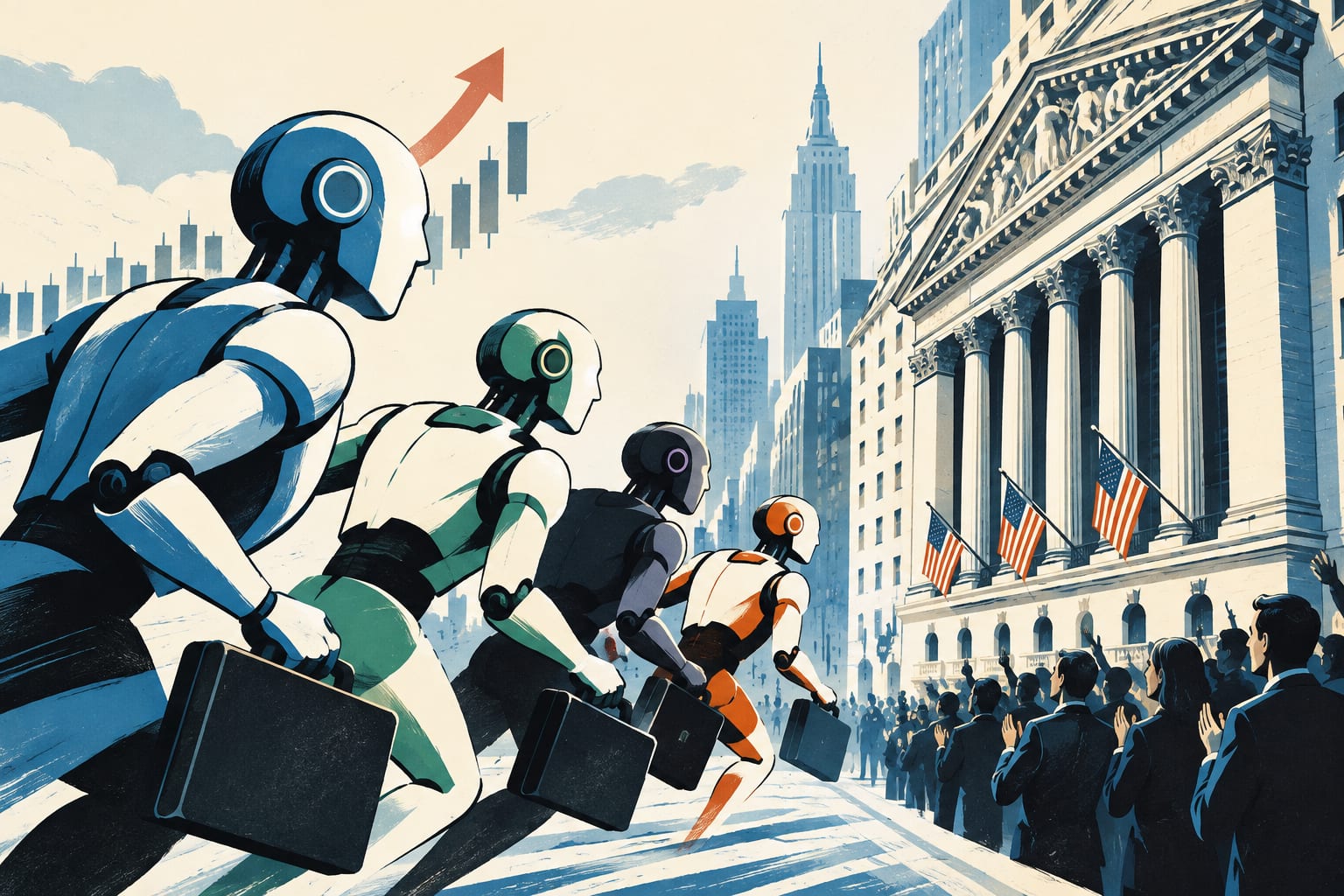
AI companies are barreling toward huge Wall Street debuts. A look at the biggest players
Wall Street is bracing for what could be one of the busiest stretches of initial public offerings in years, and artificial intelligence companies are at the center of it. According to AP News, a wave of AI firms is moving toward major public listings, with investors and bankers watching closely to see which names make the leap first and what kind of valuations they command.
The framing is familiar by now. After more than two years of AI dominating headlines, earnings calls and venture capital term sheets, the next obvious step is the public market. Companies that built their businesses on the generative AI boom are reportedly lining up to let ordinary investors buy in, not just the hedge funds and private equity firms that got in early. For a public hungry to participate in the AI trade beyond buying shares of a handful of mega-cap tech stocks, that prospect is genuinely exciting.
The part most coverage will miss
What stands out in the reporting itself is the language of motion rather than arrival. The story describes companies "barreling toward" debuts, not companies that have already priced shares or set dates. That distinction matters. A company barreling toward an IPO is still subject to market conditions, regulatory review, investor appetite and its own internal readiness, any of which can delay or reshape the offering. The framing promises "a look at the biggest players," which tells readers this is meant as a scene-setter, an overview of a field in motion rather than a confirmation that these debuts are locked in.
That is worth sitting with. Coverage built around anticipation tends to get read as certainty by the time it reaches a headline. The actual claim being made here is narrower: that AI companies are heading in this direction, not that a specific slate of offerings has been finalized, priced or dated.
Analysis (opinion)
This site's view, and the view of the analyst who covers this beat for us, is that the rush toward AI IPOs deserves more scrutiny than enthusiasm right now. The pattern of companies racing toward public listings while a sector is still in its hype phase is not new, and it does not always end well for the investors who buy in at the top. When a wave of similarly positioned companies all try to go public in the same stretch, it tends to signal that insiders and early backers want liquidity while enthusiasm is highest, not necessarily that the business fundamentals have matured to the point where public markets are the right test.
Our analyst's approach here is the same one applied across this beat: look past the excitement and check what the available facts actually support. In this case, the facts on the page are limited to the trend itself, a cluster of companies moving toward the public markets. That alone does not tell us whether these businesses have durable revenue, manageable cash burn or defensible technology moats, the things that actually determine whether a stock holds its value after the opening-day pop fades. The gap between "barreling toward a debut" and "built to last as a public company" is exactly where retail investors tend to get hurt, and it is the detail that often gets lost when a wave of IPOs is treated as one big story rather than a series of separate bets.
The other side
To be fair, there is a legitimate bull case for AI companies going public now. Demand for AI tools, infrastructure and services has grown rapidly, and many of the companies pursuing listings have real customers, real revenue and genuine technological advantages built over the past few years. Going public also brings capital these companies can use to keep investing in the compute, talent and research that AI development requires. For some of these firms, this may be less about cashing out early backers and more about securing the resources to compete in a capital-intensive race.
The question to ask now
Before any of these companies ring the opening bell, the question worth asking is not whether AI is a real technology shift. It clearly is. The question is which of these specific businesses, when they finally do price their shares, will actually be built to survive as public companies once the hype that got them there starts to fade.
Source: AP News
Related reading from us: Stop Chasing Views: How 87% of Creators Are Using AI to Build Real Businesses Beyond Social Media