Canva Releases AI Image Generator That Wasn’t Trained on Photographs
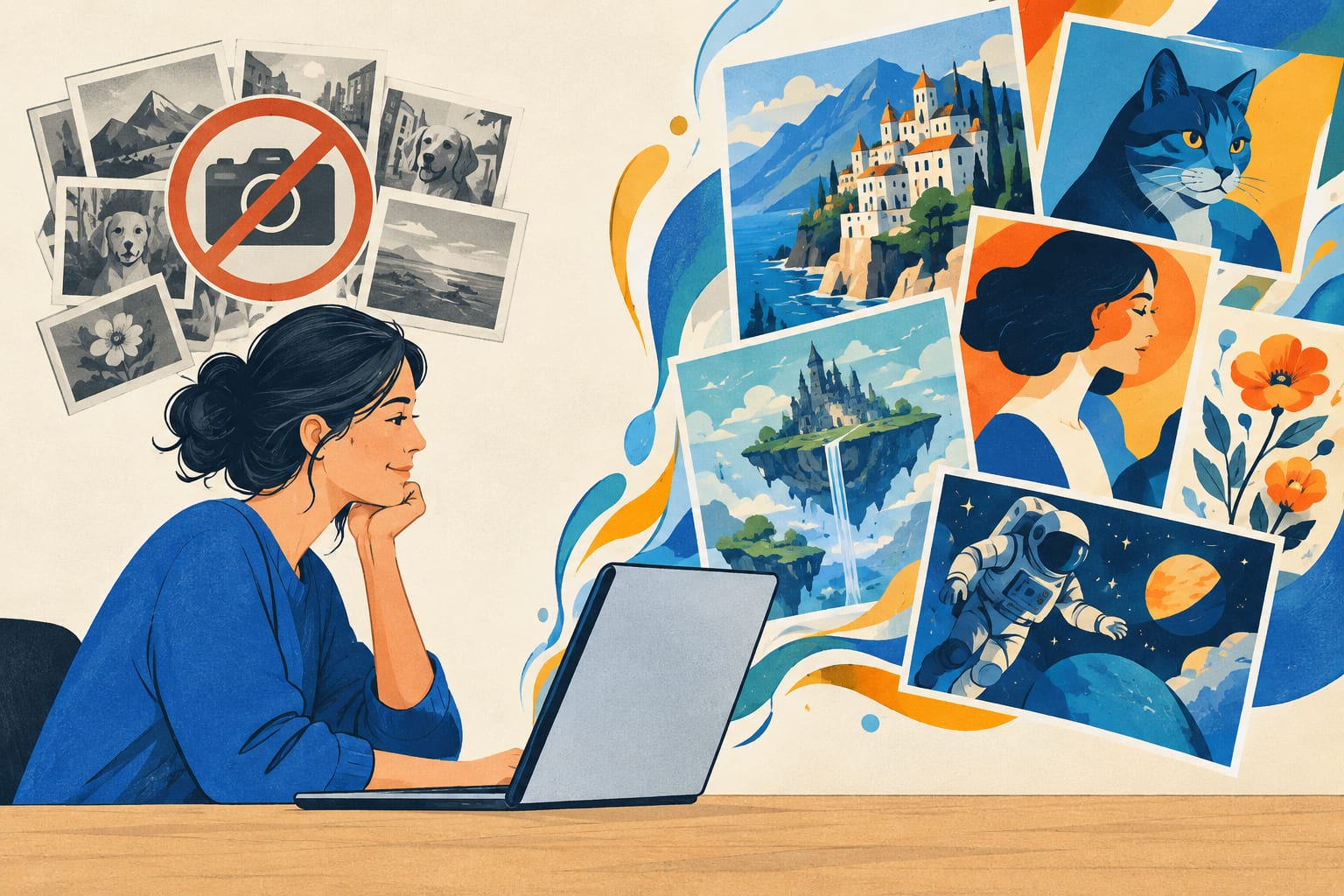
Canva has launched a new AI image generator built, the company says, without using photographs in its training data. The tool arrives at a moment when nearly every major AI image platform is fighting lawsuits, user backlash, or both over how its models learned to draw, paint, and render. Canva's pitch is straightforward: an image generator that sidesteps the thorniest question in the industry by simply not touching the material that caused the fight in the first place.
For most readers, that will be the whole story. A design platform used by millions of small businesses, marketers, and hobbyists now has its own AI generator, and that generator was built on a cleaner foundation than the Stable Diffusions and Midjourneys of the world. Given how often "trained on scraped photographs" has become shorthand for "trained on stolen work," a generator that skips photographs entirely reads like an easy win for a company that has spent years building trust with creators who license their work through Canva's own marketplace.
The part most coverage will miss
The detail buried in the announcement is not that Canva avoided controversy. It's that Canva avoided a specific category of controversy. "Not trained on photographs" is a narrower claim than "trained ethically" or "trained only on licensed material." It says nothing about illustrations, vector graphics, stock design elements, or any other visual asset Canva has amassed through its own platform and the Canva-owned content libraries that millions of users have uploaded or paid to license over the years. Canva sits on one of the largest proprietary libraries of templates, graphics, and design elements in the world. A generator that excludes photographs while still drawing on that library is not necessarily avoiding the use of other creators' work. It may simply be avoiding the one category of training data that has generated the most lawsuits.
That distinction matters because it shapes what the tool can actually produce. A model trained away from photographic data is likely to lean toward illustrative, graphic, and design-forward outputs rather than photorealistic images. For a platform built around templates, social posts, and marketing graphics rather than photo editing, that is not a weakness. It is arguably the point.
Analysis (opinion)
This site's analyst, who makes a habit of finding the angle the rest of the coverage skips past, reads the "no photographs" framing as a carefully chosen line rather than a sweeping ethical stand. Companies facing litigation over AI training data have learned that vague reassurances don't hold up in court or in public opinion, so specific, narrow claims have become the preferred language. "Not trained on photographs" is exactly that kind of claim. It is verifiable, it is defensible, and it conveniently addresses the exact material that has triggered the biggest copyright suits against AI image generators to date. It does not address illustrations, design elements, or the enormous trove of user-generated content sitting inside Canva's own ecosystem. Readers should treat this as a well-targeted legal and PR move first, and a transparency breakthrough second.
The other side
To be fair, avoiding photographic training data is a real technical and legal choice, not a cosmetic one. Photographs are the category most frequently tied to scraped datasets like LAION, and they're the source of the highest-profile lawsuits against AI image companies, including the ones brought by photographers and stock agencies. A company the size of Canva choosing to build around a different data foundation entirely is a meaningful decision, and it may reflect genuine caution rather than clever wording. Not every careful phrase is spin.
The question readers should be asking now
Before crediting Canva with solving AI's data problem, the question worth asking is simple: what exactly was this model trained on instead? Canva has told us what it avoided. It hasn't told us, at least not in what's been reported, what replaced it. Until that's clear, "not trained on photographs" is a fact about one ingredient left out of the recipe, not a full list of what went into the pot.
Source: PetaPixel
Read our previous article: Etsy Draws a Line on AI, Just Not Where You'd Expect