Google’s SynthID Detector Goes Public, But Who’s Actually Covered?
On October 7, 2026, Google took its SynthID Detector out of limited testing and opened it to the world. The portal, synthid.com, is now available globally in English, and it does one specific job: it checks whether a piece of media carries the invisible SynthID watermark that Google embeds in AI-generated images, video and audio.
The headline move here is the expansion of partners. Verification through the portal now covers content made with Google's own tools as well as output from OpenAI, NVIDIA and Kakao. Google has also announced that Apple is next on the list, though no timeline was given for when that integration lands. Google's own announcement, posted from its official account, framed the rollout as part of "an industry-wide effort to make AI-generated content more transparent."
That's the story most people will read: a tech giant opening up a watermark-detection tool so anyone, anywhere, can check if a photo or clip was AI-made. Simple, useful, and seemingly in the public interest.
The part most coverage will miss
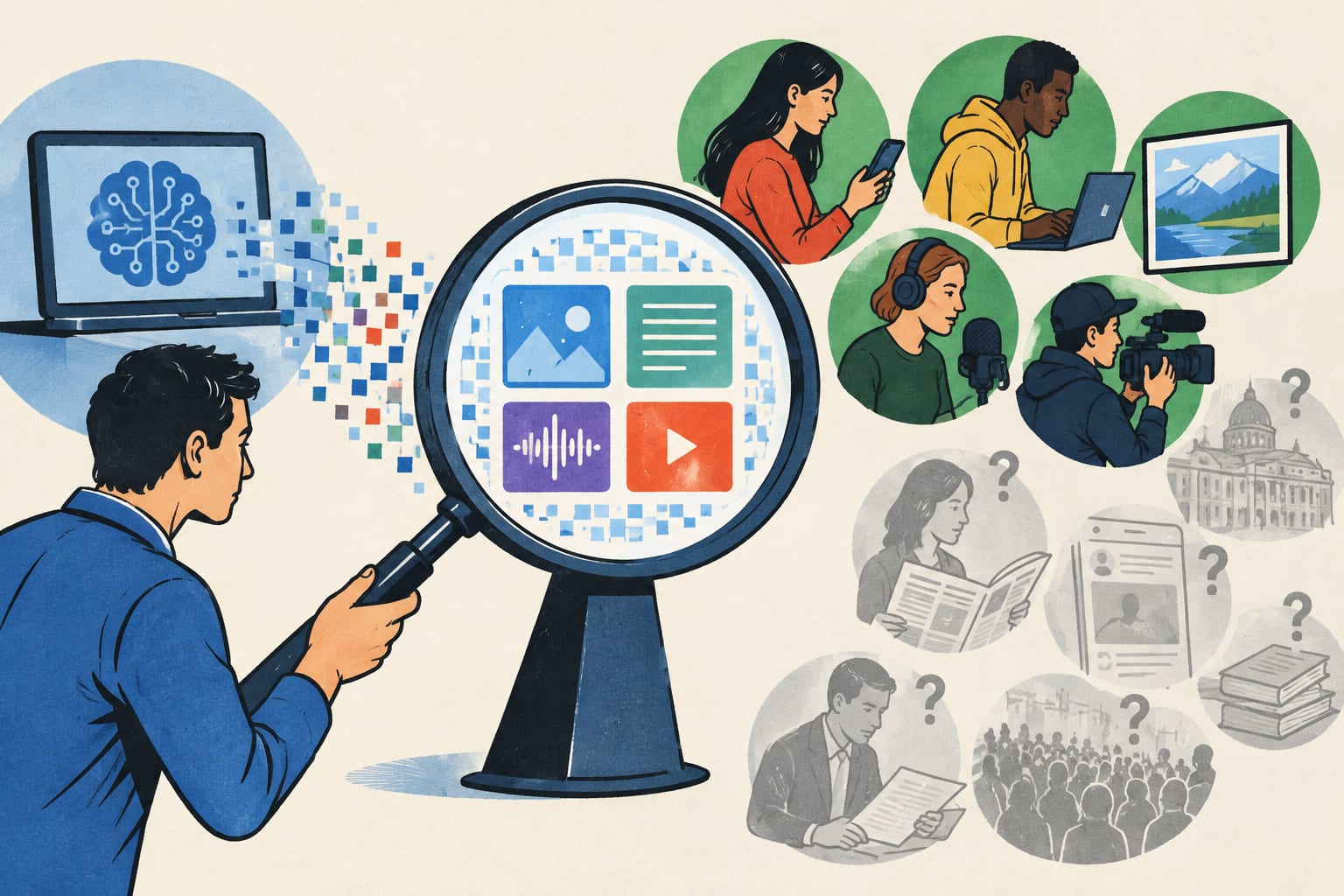
Look closely at what the announcement actually says, and the scope is narrower than the "industry-wide effort" language suggests. The detector only confirms the presence of the SynthID watermark itself. It does not claim to detect AI-generated content in general, and it says nothing about files that were never watermarked in the first place, whether because they came from a tool that doesn't use SynthID or because the watermark was stripped or degraded before upload.
The partner list is also worth sitting with. OpenAI, NVIDIA and Kakao are in. Apple is "soon." That's four companies, named explicitly, against a landscape of AI content generators far larger than four. The announcement doesn't name any other partners, doesn't say how partners were chosen, and doesn't address what happens to content made by tools outside this circle. Nothing in Google's statement suggests the detector can flag unwatermarked AI media at all, regardless of its source.
The portal's language access is also specific: it's available worldwide, but only in English for now. No mention of additional languages or a rollout schedule for them.
Why this matters (opinion)
This is where an analyst who spends time looking for the angle everyone else skips earns their keep. Based strictly on what's on the page, the real story isn't "Google lets anyone detect AI fakes." It's that Google is building a verification standard that only works for content made by Google and a short, named list of partners. Every claim in the announcement about transparency sits on top of that limitation, not around it.
That distinction matters because a tool that can only confirm "yes, this came from one of these four or five companies' AI systems" is fundamentally different from a tool that can tell you "no AI touched this file" or "yes, this is a fake, regardless of who made it." The announcement doesn't claim the second thing. Readers filling in that gap on their own are extending the story further than Google has.
The Apple addition is the detail worth watching. It's "announced as next," not live. Until it ships, SynthID Detector verifies content from exactly four sources: Google, OpenAI, NVIDIA and Kakao. The gap between "announced" and "available" is where announcements like this tend to get reported as bigger than they are.
The other side
To be fair to Google, the framing as an "industry-wide effort" isn't baseless. Getting direct competitors and major AI labs to agree to a shared watermark-detection standard, even a partial one, is not trivial, and the list growing to include Apple would mean most of the largest consumer AI platforms sit under one verification portal. A global, free, English-language tool that didn't exist in this open form before is a real expansion of access, even if its coverage is bounded.
The question to ask now
As more partners join this list, the real test isn't whether the detector works on the content it's built to catch. It's what happens to everything it wasn't built to catch, and how long the gap between "verified by SynthID" and "verified as real" stays invisible to everyone using the tool.
While synthid detector backlinks continue to proliferate across the web, many publishers remain uncertain about the tool’s actual coverage and reliability.
Source: Pasquale Pillitteri
If you missed it: YouTube's AI Push Is Really About Keeping You From Leaving