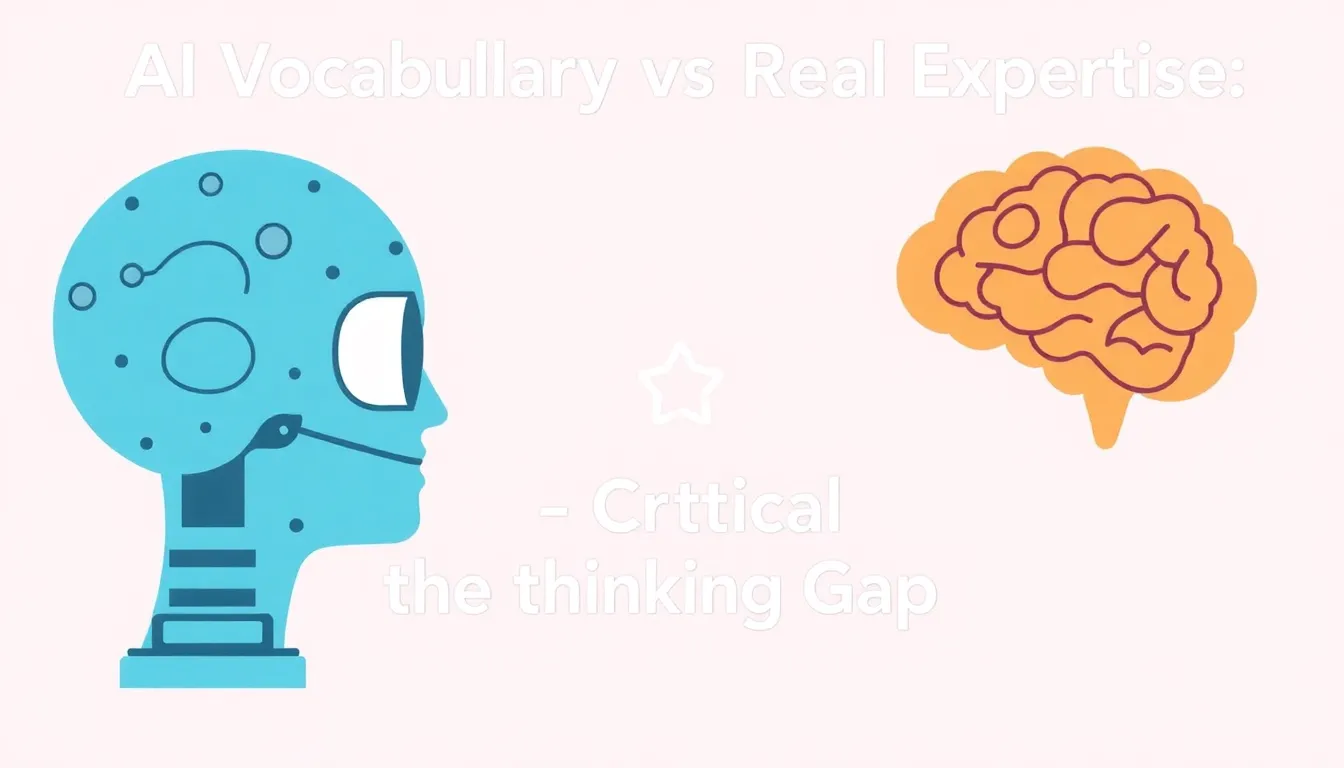
AI Vocabulary vs Real Expertise: The Critical Thinking Gap
The Interview Room Reality Check
Hiring managers across industries are witnessing a troubling phenomenon. Candidates arrive with impressive credentials, perfect industry vocabulary, and comprehensive tool knowledge on their resumes. However, when asked to solve problems in real-time, many fall silent—not in thoughtful contemplation, but in the empty way that reveals they’ve never independently worked through complex challenges. Recent studies from Microsoft, Swiss Business School, and TestGorilla have independently documented this pattern, showing that heavy AI reliance directly correlates with declining critical thinking abilities. The effect is particularly pronounced among younger, less experienced professionals who have grown up with these tools. This isn’t merely a technology issue—it’s fundamentally about cognition and how we develop professional expertise. The challenge extends beyond traditional industries into specialized fields like SEO and digital marketing, where professionals increasingly rely on automated systems for post content automation and strategic decision-making, potentially creating gaps in foundational problem-solving skills.
Understanding the Expertise Architecture
The real challenge isn’t humans versus machines—it’s understanding the difference between information retrieval and professional judgment. These represent fundamentally different cognitive processes, though AI has made them appear interchangeable in concerning ways. Retrieval involves accessing relevant information, synthesizing patterns across knowledge bases, and producing fluent output that resembles expertise. Large language models excel at this layer, often surpassing individual humans in information processing speed and comprehensiveness. However, judgment operates differently. It encompasses knowing which questions to ask in specific contexts, recognizing when seemingly correct information is wrong for particular situations, and applying lessons learned from past mistakes. Judgment develops through deliberate practice under real conditions with actual consequences—something AI cannot replicate. Many professionals now use WordPress auto post systems and similar tools for content creation, which handle retrieval excellently but cannot replace the contextual judgment needed to determine strategy, timing, or audience-specific messaging that drives real business results.
Building Balanced Professional Skills
Effective expertise operates as a three-layer stack rather than a simple spectrum. Layer one covers retrieval—synthesis, pattern recognition, and volume processing—which AI handles exceptionally well. Smart professionals should delegate these tasks to AI, such as using automated competitive analysis tools or SaaS automatic content posting systems to free up time for higher-value work. Layer two represents the interface between human and AI—hypothesis formation, question quality, and contextual filtering. This is where true leverage exists, requiring practitioners to know what good answers look like before asking questions. Your ability to prompt AI effectively directly reflects your underlying judgment quality. Layer three involves consequence and context—understanding real-world implications and applying experience-based wisdom that only comes from facing actual challenges over time. The key is recognizing which layer you’re operating in and ensuring you’re building capabilities across all three. Professionals who master this balance can harness AI’s retrieval power while maintaining the critical thinking skills that drive meaningful results and career advancement.
Source: AI Gives You The Vocabulary. It Doesn’t Give You The Expertise